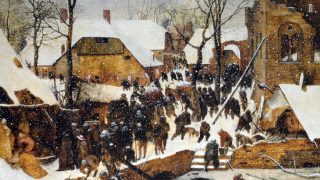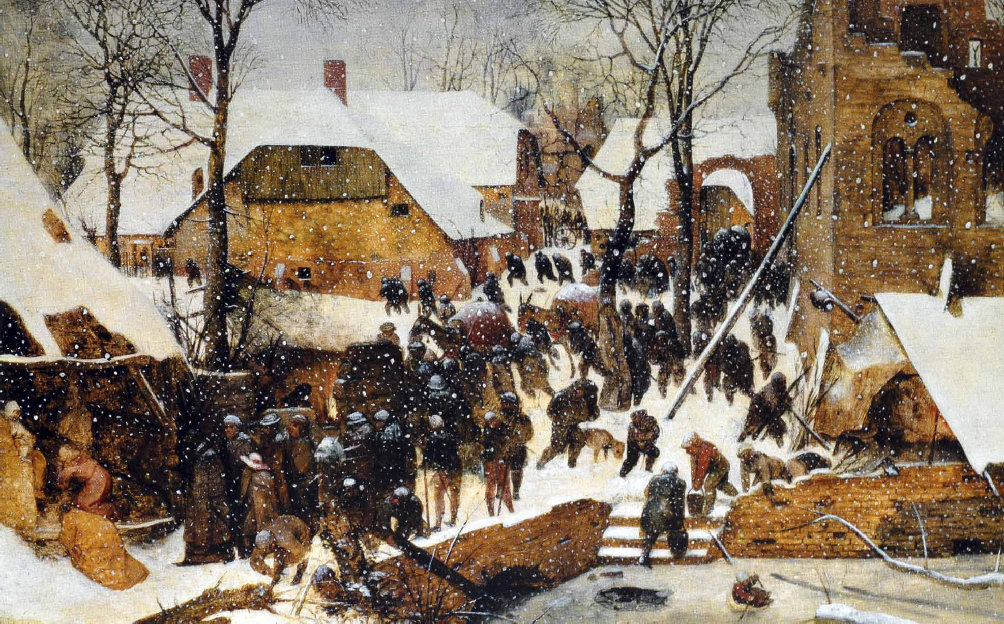
Pieter Brueghel l’Ancien, The Adoration of the Magi in a Winter Landscape, 1563, Oskar Reinhart Museum “Am Römerholz”, Winterthur
Did you know that for a long time, winter was very rarely depicted in art? Before the 16th century, it appears occasionally in calendars or illuminated manuscripts, but it is not yet considered a subject in its own right. It is only in the second half of the 16th century that the first snowflakes truly begin to settle onto painted canvases.
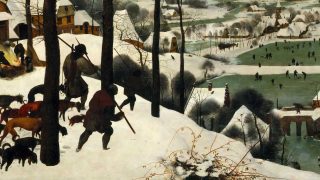
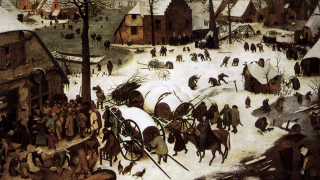
The Flemish painter Pieter Bruegel the Elder is one of the first artists to represent winter and snow. His works, such as The Adoration of the Magi in a Winter Landscape (1563) and Hunters in the Snow (1565), mark a turning point in the history of art. How can we explain this sudden interest in a season previously overlooked? The emergence of winter landscapes is no coincidence. It coincides with the “Little Ice Age,” a period during which winters became harsher and longer. Artists—witnesses of their time—translated this climatic reality onto their canvases, capturing the way it reshaped their everyday surroundings. They painted what they saw… but also what the season symbolised: the passage of time, melancholy, stillness.
In the 19th century, the Impressionists embraced snow in turn. They saw in it the perfect setting to play with light and colour: in the works of Monet, Sisley, or Pissarro, white unfolds into an infinite palette of tones. And this fascination with winter is not limited to Europe: in Japan, Hokusai and other masters of the printmaking tradition made the snow-covered Mount Fuji an iconic motif.
To warm up your long December evenings, we invite you on a journey through the most beautiful winter landscapes in the history of art.