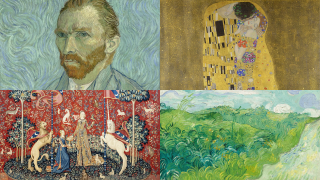
Each hue reveals a sensibility, a curiosity, a way of connecting with artworks. Art Explora Academy helps you find the perfect art history journey… by following the colors that attract you! 🎨
So, which color will guide your discovery of art?
Red – Renaissance and Enlightenment
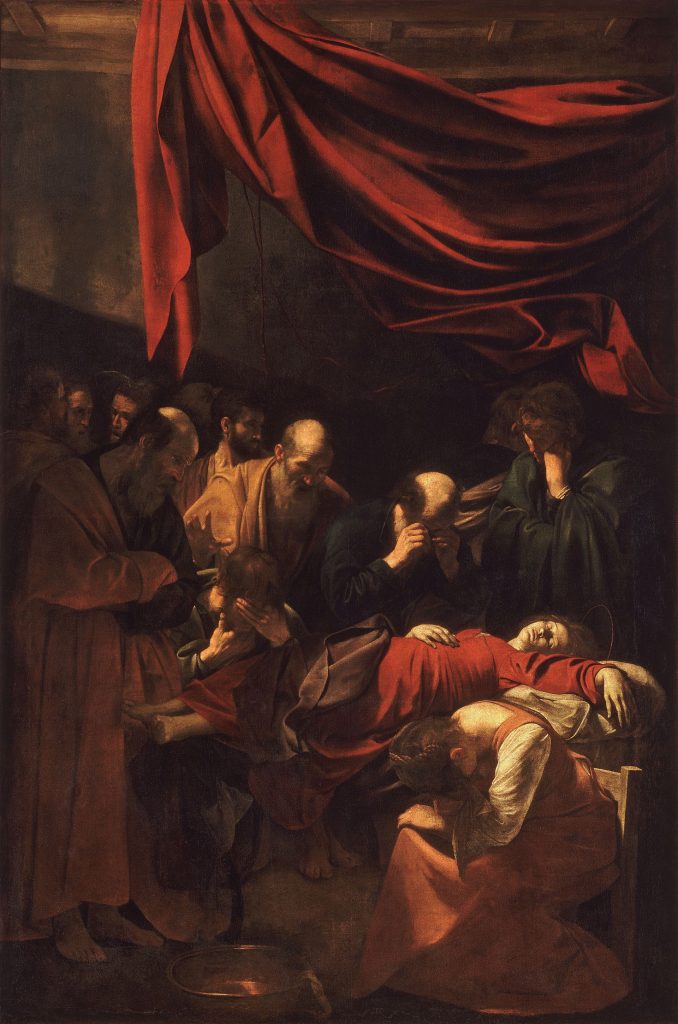
Caravaggio, The Death of the Virgin, 1600, Louvre Museum, Paris
If red is your favorite color, you are probably drawn to intensity, emotion, and the power of images. During the Renaissance and the Enlightenment, red brings scenes to life, highlights the human body, and emphasizes contrasts. A perfect journey for those who love expressive, powerful, and deeply human art.
Renaissance and Enlightenment CourseYellow – Egypt and Mesopotamia
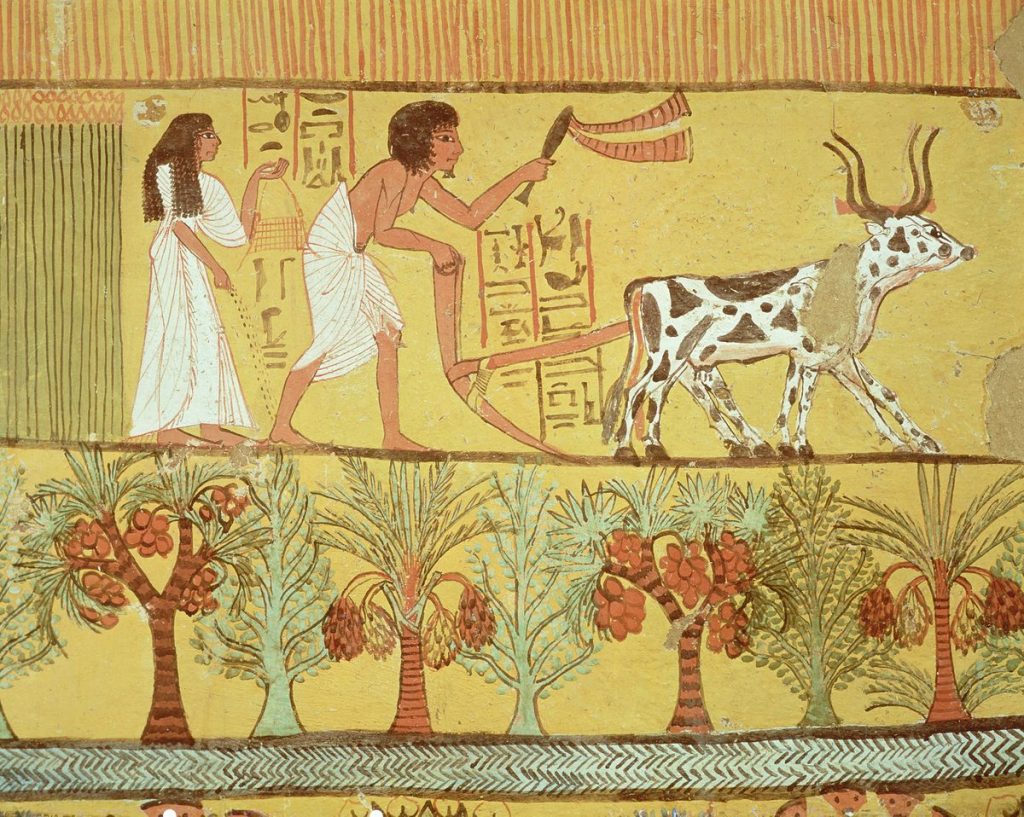
Fields of Ialou and the Journey of Re, between 1279 and 1213 BCE, Deir el-Medina, east wall of Senedjem’s tomb, painted plaster ©Bridgeman Images
Do you have a soft spot for yellow? Then you are probably attracted to light, energy, and the idea of renewal. In ancient Egypt and Mesopotamia, yellow is associated with the sun, gold, and the vital forces that govern the world. A perfect journey to explore the links between art, myths, and ancient civilizations.
Egypt and Mesopotamia CourseBlack – Contemporary Art
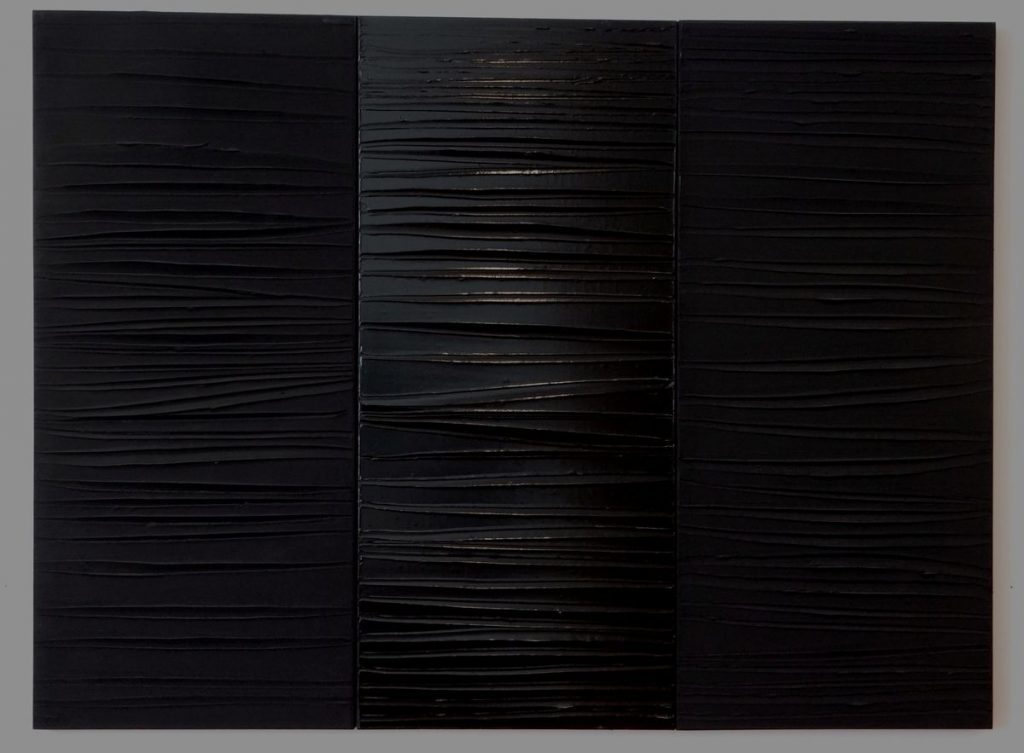
Pierre Soulage, Painting 181 x 244 cm, February 25, 2009, acrylic on canvas, Musée des Beaux-Arts de Lyon ©Pierre, CC BY-NC-SA 2.0
Do you like black? You are probably sensitive to sobriety, minimalism, and contemplation. In contemporary art, black is not the absence of color but a space for experimentation where light, texture, and gesture take center stage. A journey for those who like to see differently.
Indigo Blue – Asian Art
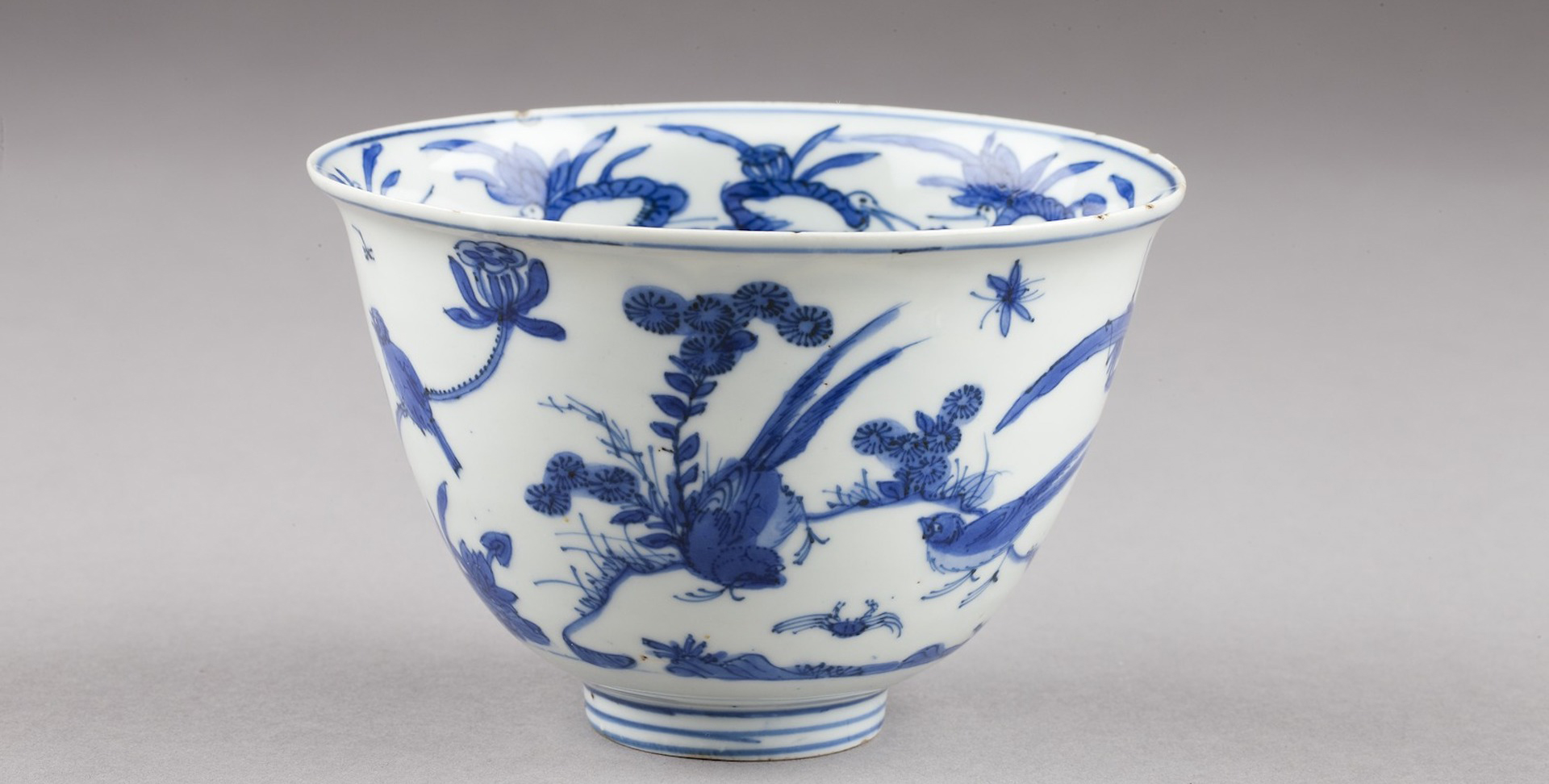
Bowl with flowers and birds in underglaze blue, Ming Dynasty, 1579–1620, blue-and-white porcelain ©Hallwyl Museum / Jens Mohr, CC BY-SA 3.0
If blue is your favorite color, you are probably drawn to harmony, serenity, and depth. In Asian arts, blue plays a major role, from the refined porcelains of the Ming Dynasty to the famous Japanese prints. Associated with wisdom, infinity, and the connection between sky and sea, this color reveals art of great technical and symbolic mastery. A perfect course for those who love to travel between tradition and emotion.
Asian Art CourseWhite – Ancient Greece and Ancient Rome
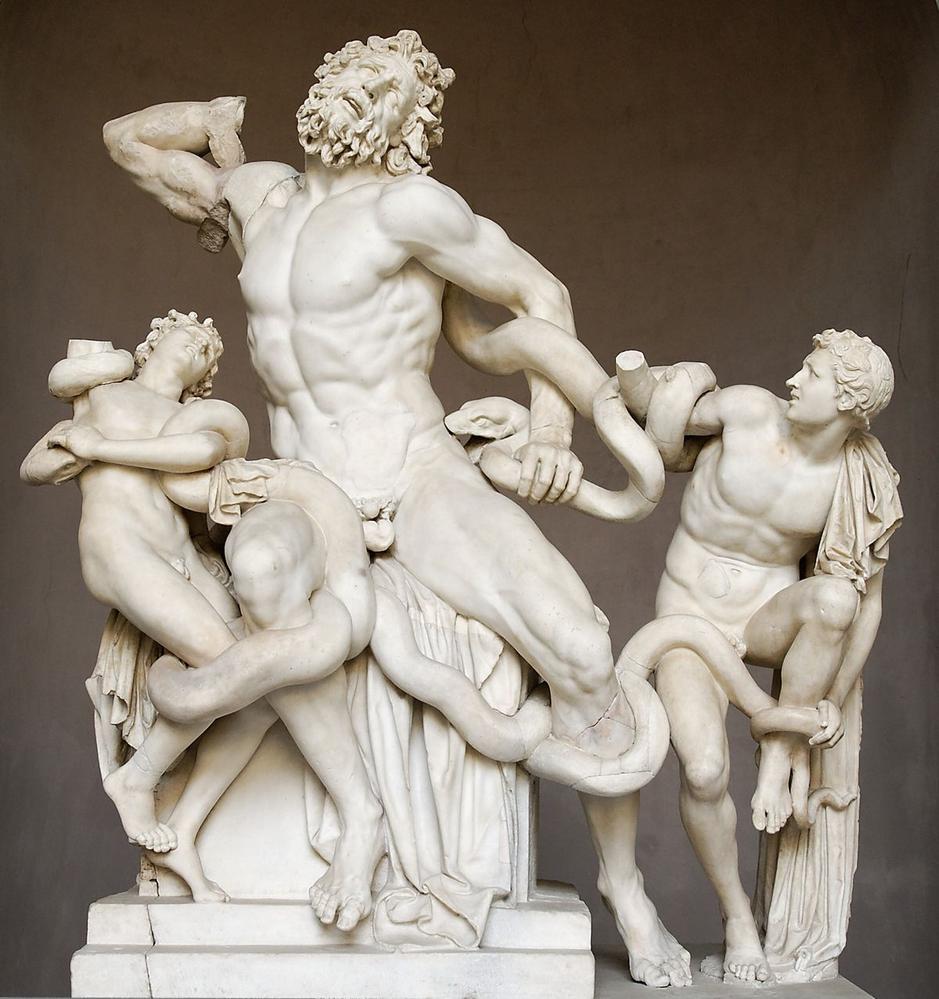
Laocoön Group, 2nd–1st century BCE, marble, Pio-Clementino Museum, Vatican
If white is your favorite color, you are likely attracted to purity, balance, and ideal forms. You will enjoy the classical beauty, harmony of the human body, and perfection of proportions in the marble sculptures of ancient Greece and Rome. A perfect course for those who want to understand the foundations of Western art.
Gold – Medieval Art

Simone Martini and Lippo Memmi, The Annunciation with Saint Margaret and Saint Ansanus, 1333, tempera on gold ground, Uffizi Gallery, Florence ©Web Gallery of Art
If gold appeals to you, you are sensitive to light, reflections, and shimmering surfaces. In medieval art, this color adds depth and relief, giving compositions an almost otherworldly effect. The perfect course for those who want to be dazzled by luminous and powerful artworks.
Medieval art CourseGreen – American Art
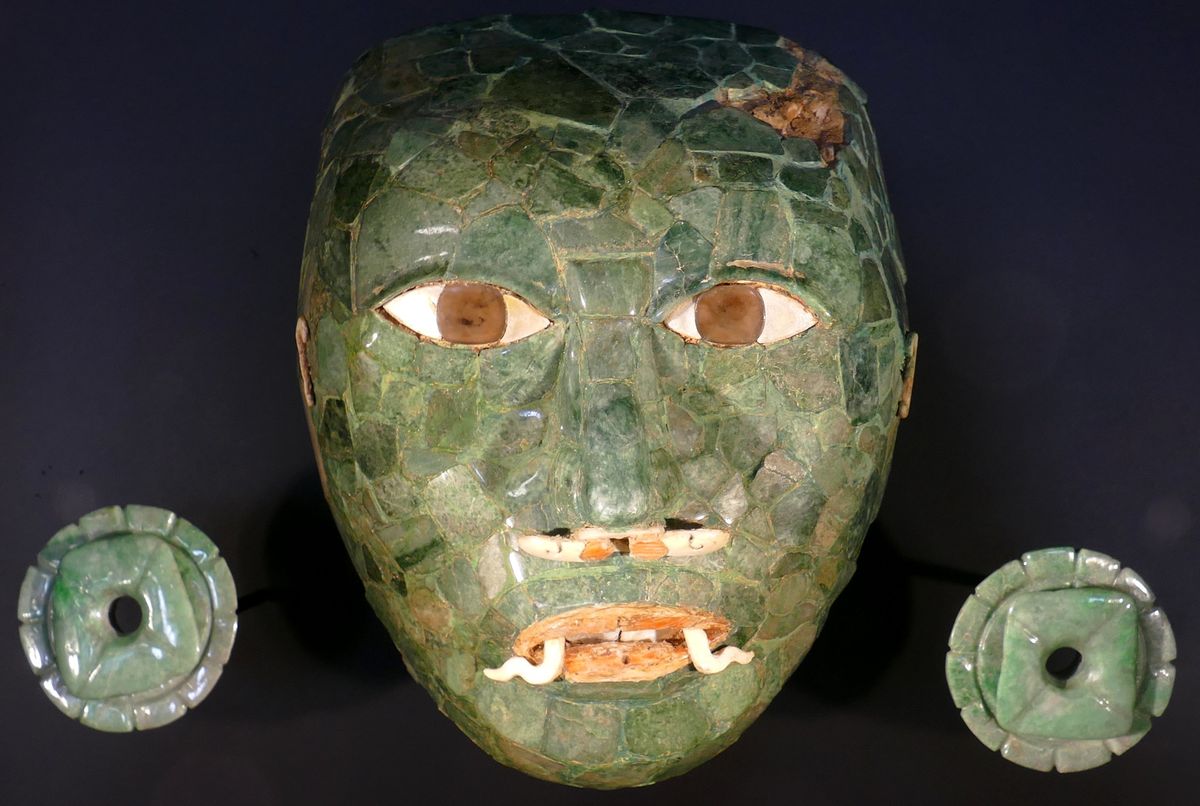
Funerary jade mask, 600–800, mosaic, Maya Archaeological Museum, Fuerte de San Miguel ©Bernard Dupont, CC BY-SA 2.0
If green is your favorite color, you are drawn to nature, balance, and vitality. In pre-Columbian American arts, jade and green objects symbolize life, regeneration, and the connection to the spiritual world. A perfect course for those who love exploring fascinating civilizations through their artworks and precious materials.
American Art CoursePink – 20th-century modern art
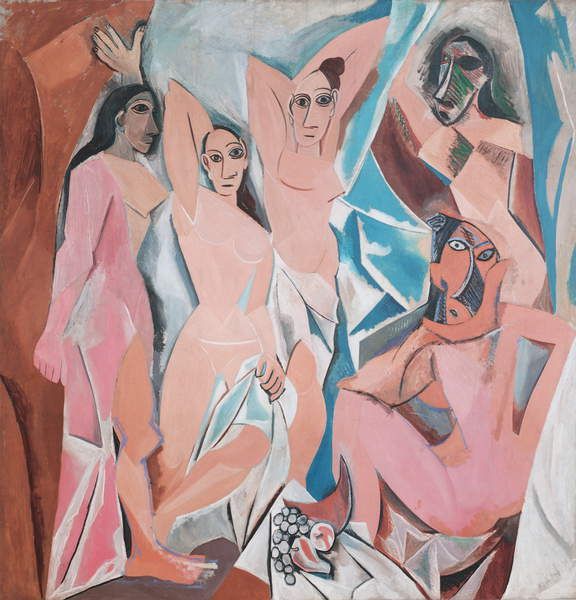
Pablo Picasso, Les Demoiselles d’Avignon, 1907, oil on canvas, Museum of Modern Art, New York ©Picasso Estate 2021
If pink is your favorite color, you are probably sensitive, creative, and bold. In modern avant-garde and Cubism, you’ll find inventive, dynamic, and lively art, where forms and colors speak for themselves. A perfect course for those who love daring and surprising art.
Ocher – African Arts
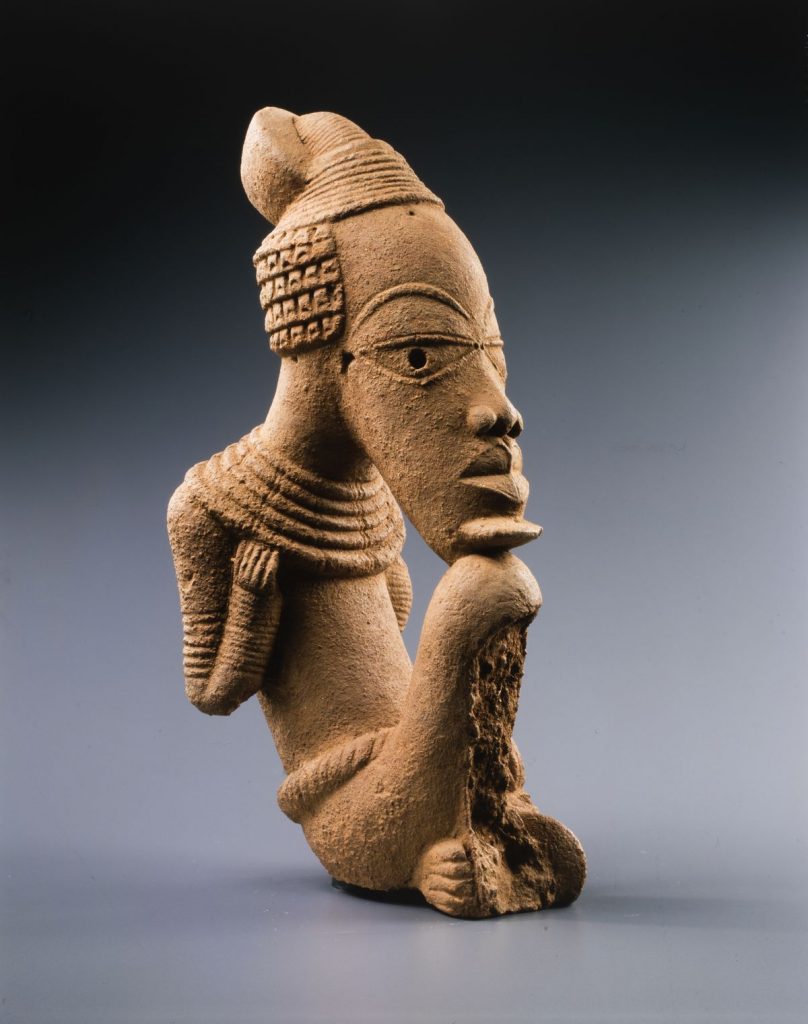
Seated male sculpture, Nok culture, 500 BCE–500 CE, Musée du Quai Branly-Jacques Chirac ©RMN-GP / Hugues Bubois
If you like ocher tones, they evoke earth, sun, and raw materials. In African arts, these colors give rise to powerful, expressive works rich in meaning. A perfect course to discover creations where form and material speak first.
African Arts CourseViolet – 19th-century art
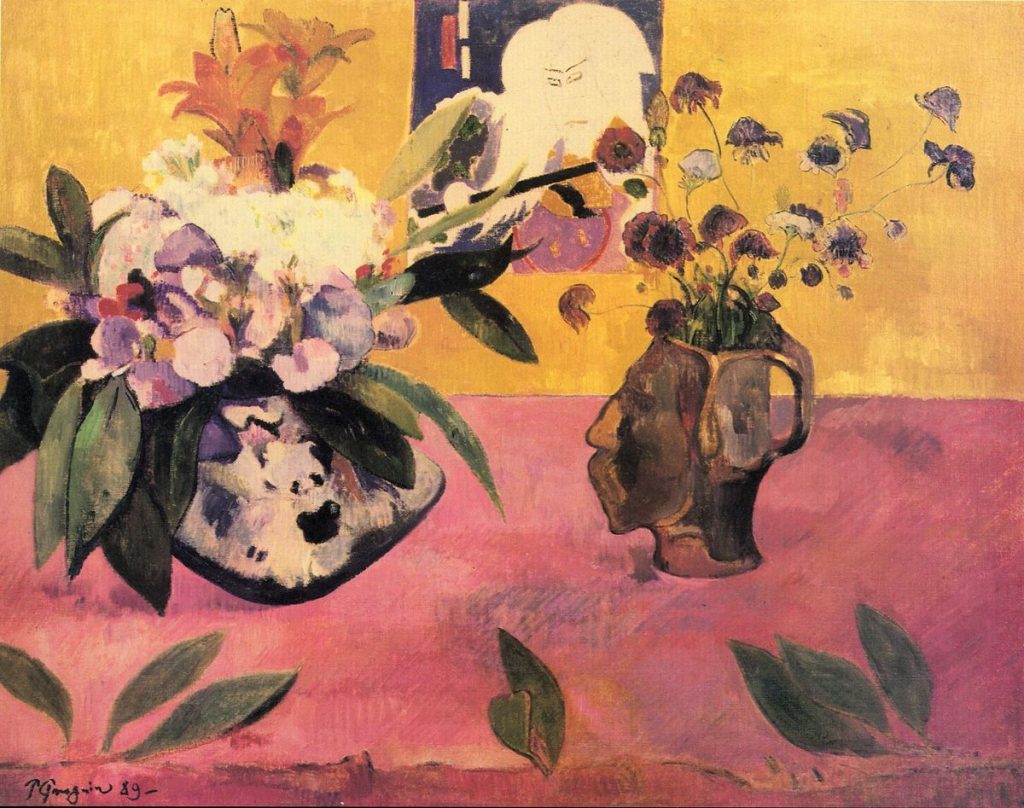
Paul Gauguin, Still Life with Japanese Print, 1889, oil on canvas, Tehran Museum of Contemporary Art
If violet attracts you, you appreciate originality and expressive power. In 19th-century art, purple appears as a symbolic color, used to create atmosphere, emphasize contrasts, and reveal the artist’s sensitivity.
19th-century art CourseTurquoise – Islamic Art
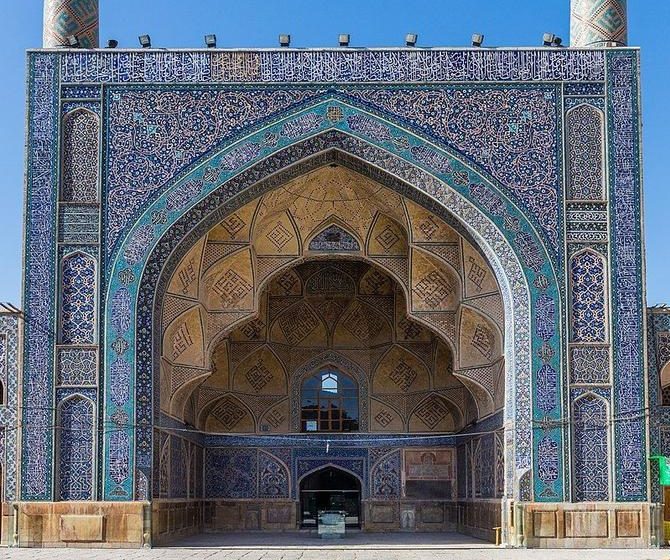
South Iwan, Grand Mosque of Ispahan, Iran ©Diego Delso, CC BY-SA 4.0
Does turquoise catch your eye? You are probably sensitive to light, patterns, and harmony. In Islamic arts, this emblematic color adorns architecture and decoration, connecting sky, water, and spirituality. A perfect course to explore art history where beauty arises from rhythm, geometry, and contemplation.
Silver – Women in Art in the Mediterranean
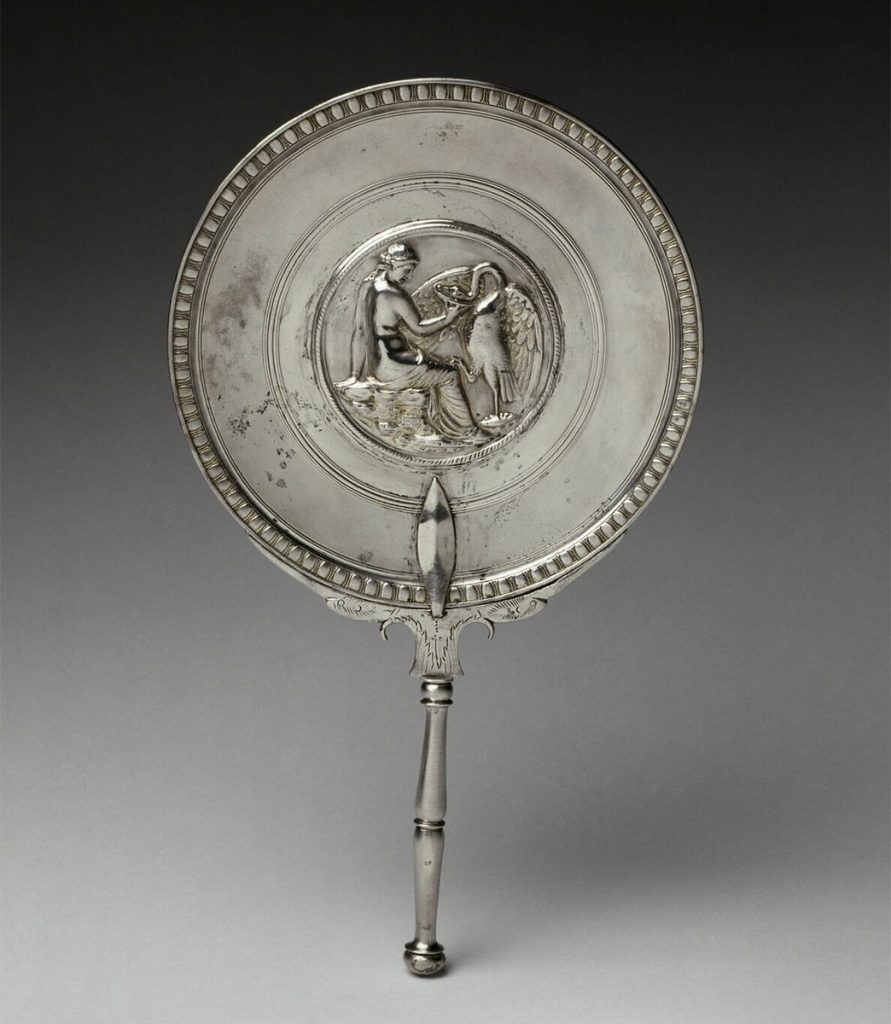
Handled mirror from the Boscoreale treasure depicting Leda and the Swan, 25 BCE–50 CE, silver, Louvre Museum, Paris ©RMN-GP (Louvre) / Hervé Lewandowski
If silver appeals to you, you are likely drawn to finesse, elegance, and precious details. In Mediterranean arts, silver appears in everyday objects linked to the body, imagery, and ritual uses. A perfect course to discover art history through meaningful objects.
Orange – The Impressionist Adventure
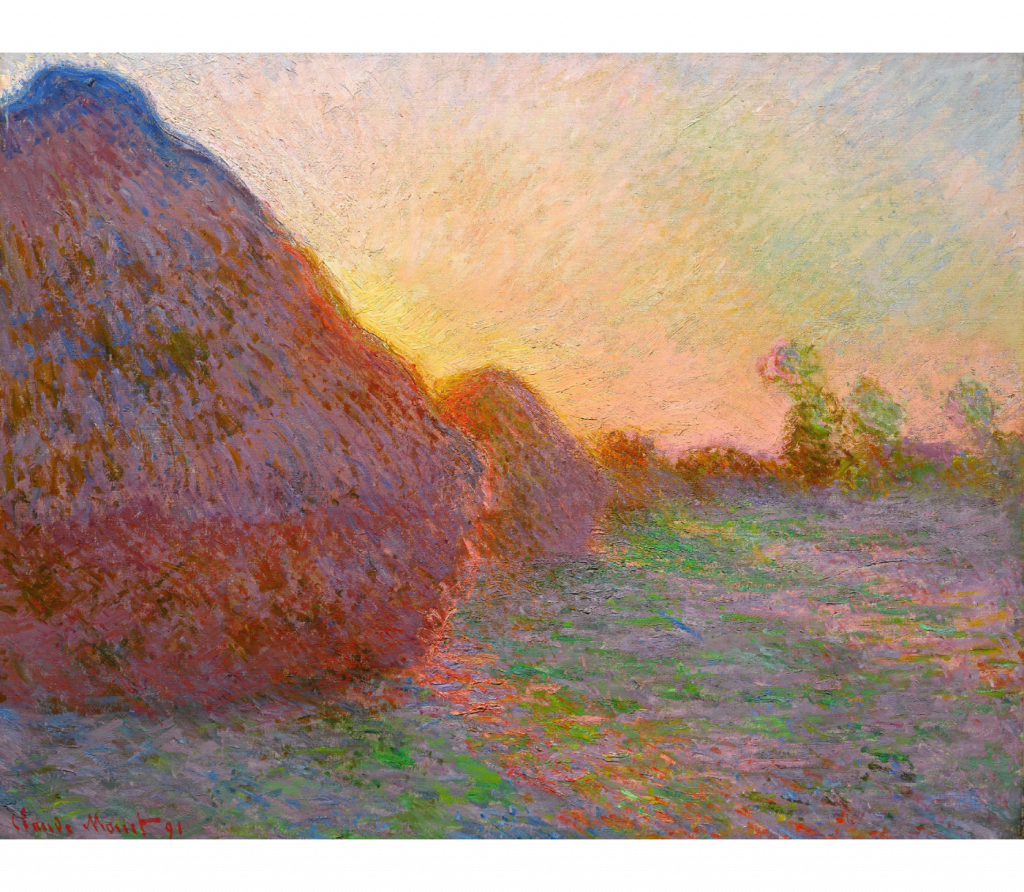
Claude Monet, Grainstacks, from the series of Haystacks, 1890, oil on canvas, Barberini Museum, Potsdam
If orange captivates you, you probably love warmth, light, and beautiful sunsets. The Impressionists, particularly Monet, used it to capture the vibrations of landscapes and the passage of time. A perfect course to explore lively and luminous painting.
Brown – Art of the Everyday
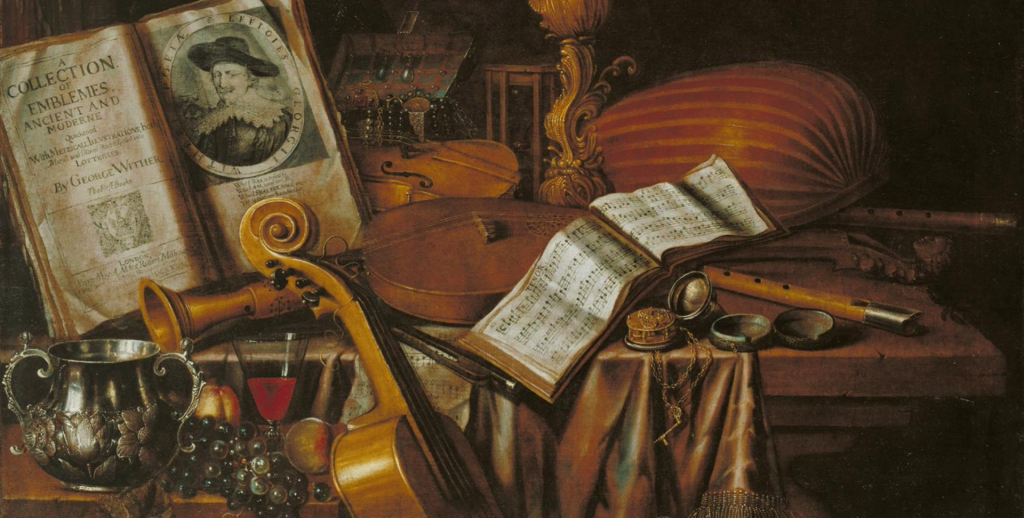
Edward Collier, Still Life with a Volume of Wither’s ‘Emblemes’. ©Tate
If brown appeals to you, you are likely sensitive to simple things, everyday objects, and the passage of time. In still life painting, this color creates quiet atmospheres and highlights textures, materials, and light. The “Art of the Everyday – Modern and Contemporary Still Life” course invites you to (re)discover the subtle beauty of ordinary things.